
The Dual-Stage Cooling uses primary and secondary cooling to manage heat more efficiently. Primary fans operate during normal conditions, creating an evenly distributed airflow across the front of the LCD panel, where heat management matters most. This helps prevent local heat spots, one of the main causes of long-term LCD degradation.
Secondary fans activate only under higher thermal loads, such as direct sun exposure and high ambient temperatures. Once active, their speed continuously adapts to the cooling demand, providing exactly the additional cooling required.
By combining intelligent fan control with an optimized, low-resistance airflow design, DSC™ reduces the amount of unnecessary filtered air passing through the integrated electronics. Carefully engineered airflow channels allow air to move smoothly through the enclosure with minimal obstruction and turbulence, improving cooling efficiency while minimizing filter load.
As a result, substantially less outside air passes through the filtration system during normal operation. The filter accumulates contaminants more slowly, extending filter lifetime, increasing maintenance intervals and reducing service costs.
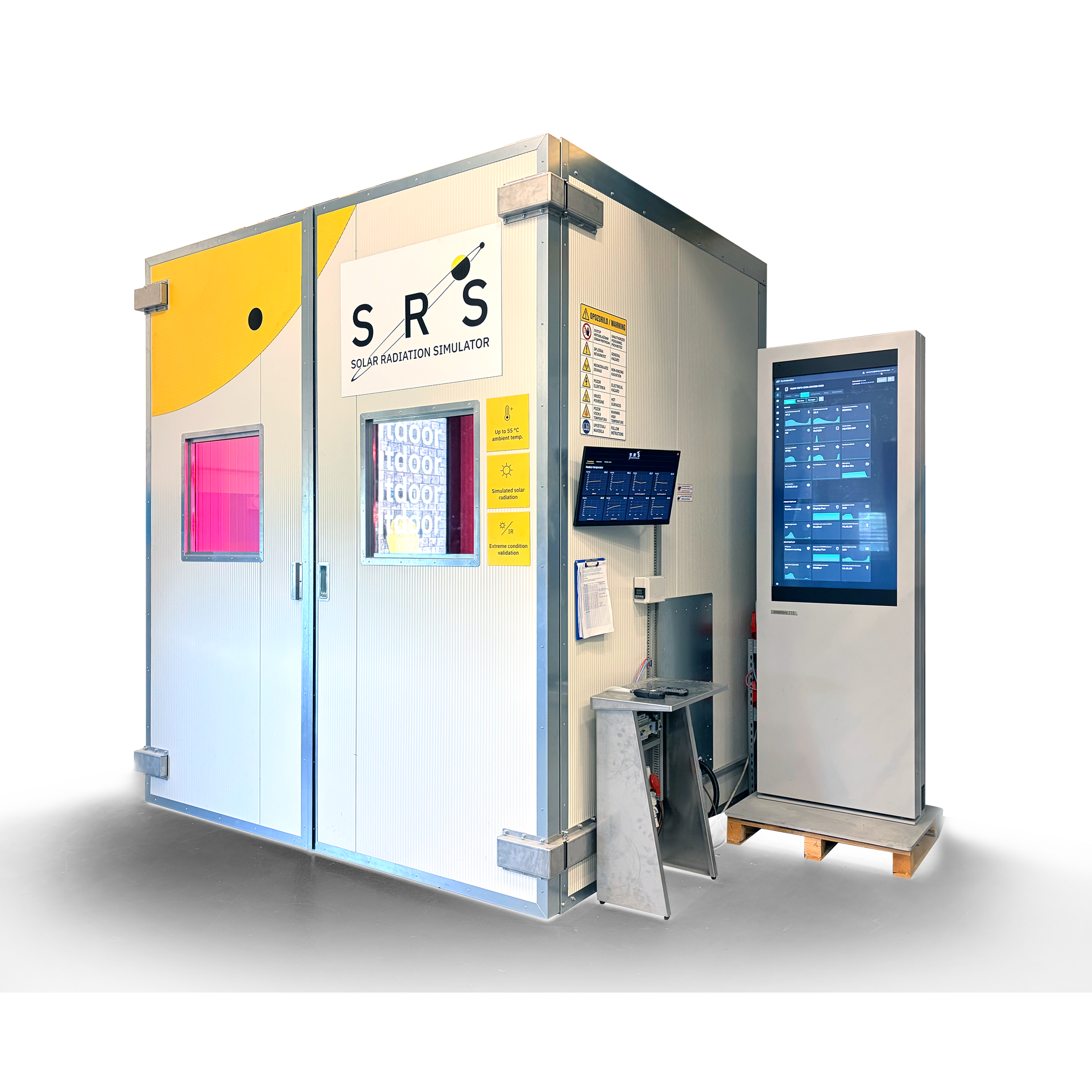
Internal testing in the Solar Radiation Simulator showed that digital signage equipped with DSC™ can operate up to 50% quieter than comparable solutions.
Low noise levels are achieved through optimized airflow design, allowing air to move smoothly through the integrated components while reducing turbulence. Under low thermal loads, only the primary cooling stage is required, allowing imotion displays to operate more quietly than a normal conversation.
When cooling demand increases, the secondary cooling stage engages. Its low RPM fans dynamically adjust their speed according to cooling demand, providing additional airflow without unnecessary fan speed or noise. Even under peak thermal conditions digital signage with DSC™ is quieter than city traffic.
The Dual-Stage Cooling System is designed to maintain a stable and evenly distributed temperature across the entire LCD surface. Instead of relying on high airflow volume alone, DSC™ uses carefully engineered airflow channels to direct cooling air precisely across the front surface of the display, where solar radiation and LCD operation create significant thermal load.
DSC™ is tested under combined solar radiation, high ambient temperatures and maximum internal thermal load in the SRS Solar Radiation Simulator. This validates stable operation under conditions beyond the intended real world operating environment.