
Ludesch Shows How Outdoor Digital Signage Can Strengthen Municipal Communication
Introduction
Digital transformation in public administration is not only about websites and apps. It is also about reaching citizens at the right place, at the right moment, with information that is easy to access and simple to update. The municipality of Ludesch in Vorarlberg offers a good example of how outdoor digital signage can support local government communication.
For the past five years, Ludesch has been active in the digitalization working group of the municipal association and has applied this strategy directly in its own community. The objective is clear: citizens should receive important municipal information quickly, easily, and through channels they already use in everyday life.
The idea behind the project is practical. Almost everyone has a smartphone, while fewer people regularly read the printed municipal bulletin. For this reason, Ludesch has updated its information channels and made them more accessible and responsive.
This shift is not about replacing one communication channel with another. It is about creating a connected information system in which each channel has a clear role. The website provides structured access to municipal content, the mobile app enables fast notifications, the printed bulletin continues to serve households that prefer traditional formats, and the digital notice board brings key information into public space.
Together, these channels form a practical communication ecosystem that helps Ludesch keep residents informed more efficiently and more consistently.
A digital communication ecosystem
Ludesch now uses several connected channels to keep residents informed.
The new municipal website, www.ludesch.at, is designed around the information needs of citizens. It provides access to current news, announcements, events, the waste collection calendar, the municipal bulletin Mein Ludesch, useful links, and key local partnerships. Local associations can also use the website to promote their events. The results were already visible in the first month after launch, with a strong increase in visitors.
The municipal app is also an important part of the communication system. Through notifications, the municipality can inform individual households quickly, for example in the event of a water pipe break affecting a specific street. This makes urgent communication faster, more targeted, and easier to manage.
The role of the digital notice board
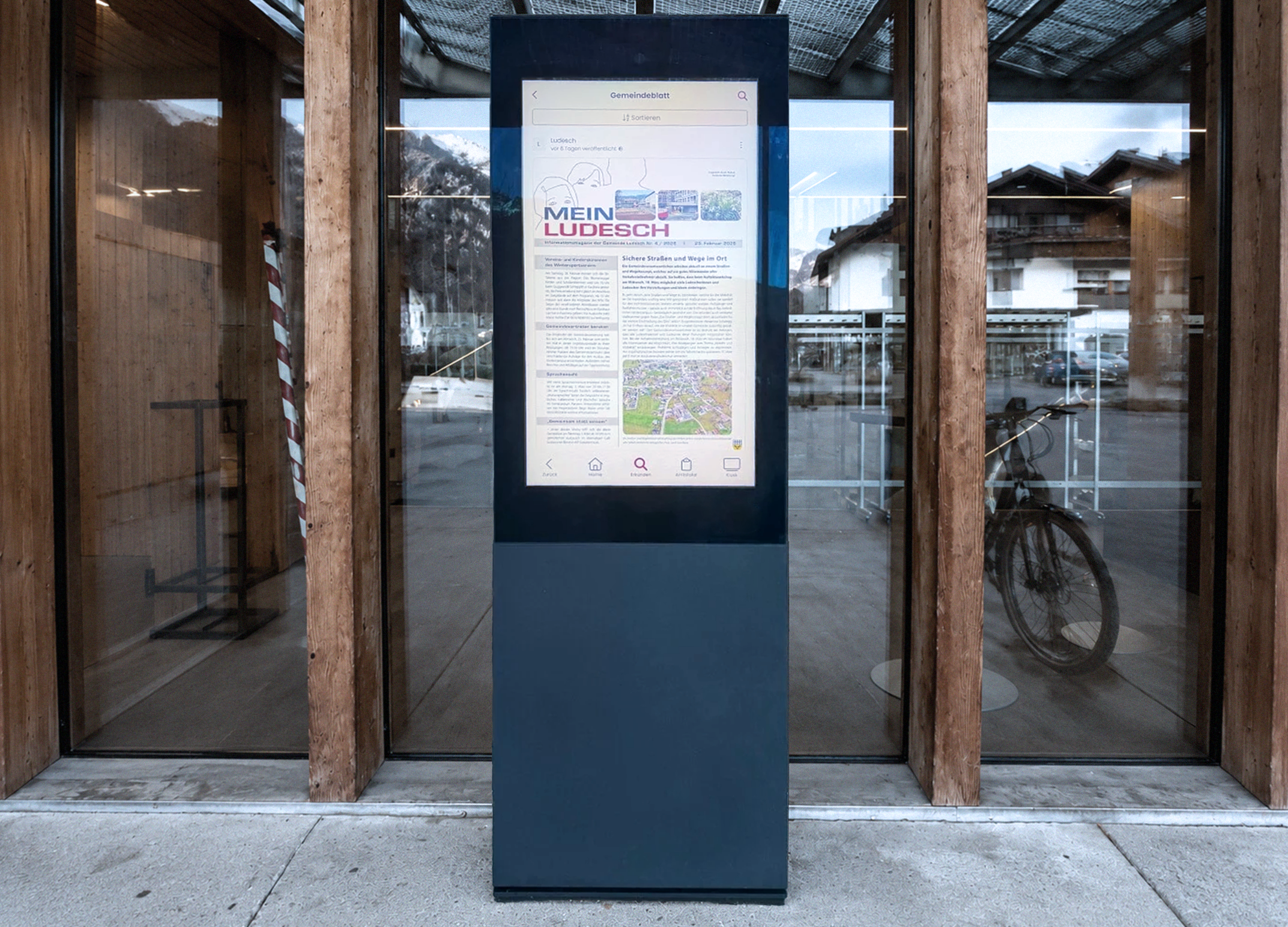
From an outdoor digital signage perspective, the most visible part of Ludesch’s communication strategy is the digital notice board at the entrance to the municipal office.
Installed in a public, high traffic location, the touchscreen display allows residents to access municipal news before they even enter the building. Since the village square is a common meeting point for many people in Ludesch, the display functions as a direct and accessible information point in everyday public space.
This is where outdoor digital signage adds value. Not every citizen will actively check the website or open an app every day. A clearly positioned public display makes municipal communication more visible and easier to access in daily life.
For this installation, Ludesch chose imotion FLOW 55” outdoor digital totem. Its intelligent thermal management regulates ventilation and heating based on actual conditions inside the housing, while remote monitoring helps operators keep track of system status without unnecessary on site checks.
This is particularly relevant in a municipal setting, where communication tools need to work consistently and with as little maintenance effort as possible. imotion FLOW can report critical events, detect filter clogging, and allow remote PC reboot when needed, which helps reduce service visits and makes maintenance more predictable and efficient.
The Ludesch project shows that outdoor digital signage is most effective when it is integrated into a wider communication structure and supported by technology that is dependable in everyday use. Used in this way, it helps municipalities bring important information closer to citizens and make public communication more immediate, visible, and practical.